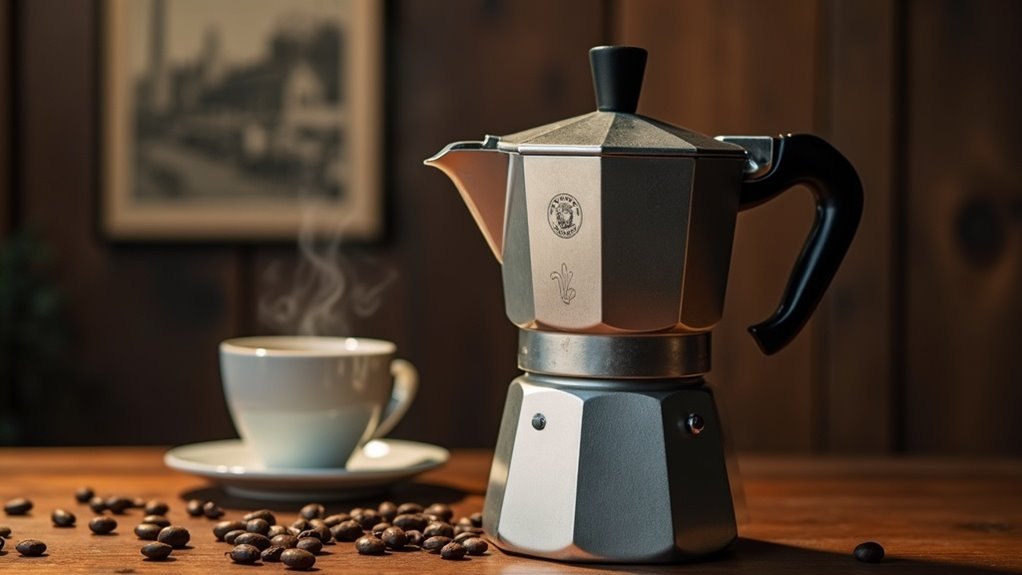
Bialetti, founded in 1919 by Alfonso Bialetti in Italy, revolutionized the art of coffee brewing with the introduction of the Moka Express in 1933, which has since become an iconic symbol of Italian coffee culture. Nearly every Italian household owns one, highlighting its profound impact on daily life and social interactions centered around coffee. Despite facing financial challenges and growing competition, Bialetti has continued to innovate, launching products such as the Espresso System and Moka Induction. This successful blend of tradition and modernity keeps Bialetti at the forefront of the coffee world. Explore the captivating journey of Bialetti’s legacy in the coffee industry.
Key Takeaways
- Bialetti was founded in 1919 by Alfonso Bialetti in Crusinallo, Italy, initially manufacturing aluminum products focused on enhancing the coffee brewing experience.
- The iconic Moka Express was launched in 1933, revolutionizing the way coffee is brewed at home and becoming a symbol of Italian coffee culture.
- Bialetti’s innovative advertising, featuring the Mustachioed Man, played a crucial role in establishing strong brand recognition and loyalty among coffee enthusiasts.
- The company faced financial challenges in the late 20th century, merging with Rondine Italia in 1993 and nearly declaring bankruptcy in 2018, but continued to be a key player in the coffee industry.
- Recent innovations such as the Espresso System and Moka Induction highlight Bialetti’s commitment to blending traditional coffee brewing methods with modern design, catering to the evolving tastes of coffee lovers.
Origins of Bialetti
When you explore the origins of Bialetti, you uncover a fascinating tale that begins in 1919 with Alfonso Bialetti’s workshop in Crusinallo, Italy.
Initially focused on manufacturing aluminum products, Alfonso’s vision evolved into Alfonso Bialetti & Co., emphasizing creativity in coffee-making.
The game-changing moment came in 1933 with the invention of the Moka Express, a revolutionary coffee maker that simplified the brewing process and established itself in Italian households.
The Moka Express, introduced in 1933, transformed coffee brewing and became a staple in Italian homes.
The name “Moka” pays homage to Yemen’s coffee-rich city, highlighting the deep-rooted connection between Bialetti and coffee culture.
Renato Bialetti, Alfonso’s son, further propelled the brand’s growth, solidifying Bialetti’s role as a cornerstone of Italian coffee culture and innovation, ensuring that coffee lovers around the world enjoy the perfect brew.
The Impact of Moka Express
The Moka Express isn’t just a coffee maker; it’s a beloved symbol of coffee culture that embodies Italy’s rich coffee tradition.
With its iconic design steeped in history and its presence in nearly every Italian household, the Moka pot has rightfully gained global acclaim and recognition.
As you delve into its influence, you’ll discover how it continues to shape coffee rituals worldwide, even as modern brewing methods emerge.
Cultural Significance in Italy
Although many may view coffee merely as a morning ritual, the Moka Express has transformed it into a profound cultural experience in Italy. It’s not just a coffee maker; it symbolizes the heart of Italian family life. With around 90% of Italian families owning a Bialetti coffee maker, this iconic device has made quality espresso accessible at home. Its design has influenced generations, making it a staple in kitchens across the country.
| Significance | Details |
|---|---|
| Year Launched | 1933 |
| Ownership in Italy | 90% of families |
| Cultural Symbol | Most popular globally |
| Slogan | “In the house, espresso just like the bar” |
The Moka Express is more than just a tool; it fosters connection and conversation, creating moments around the kitchen table that reflect the warmth of Italian culture. This beloved coffee maker continues to be a cherished part of Italian daily life, embodying the passion and tradition of Italian coffee-making.
Global Popularity and Recognition
While many coffee makers have come and gone, the Moka Express has firmly established itself as a global icon, transforming how people enjoy espresso at home.
Since its launch in 1933, this Moka pot has become a staple in 90% of Italian households, embodying the essence of Italian coffee culture.
Recognized as the most popular coffee maker worldwide, it even earned a spot in the Guinness Book of Records.
Featured in renowned museums like MoMA, the Moka Express not only showcases exceptional design but also stands as a testament to Bialetti Industrie’s craftsmanship, seamlessly blending tradition and modernity in the coffee landscape.
Advertising and Brand Recognition
Bialetti’s rise in brand recognition within the coffee sector can largely be attributed to its innovative advertising strategies, particularly its memorable campaigns on the popular Italian television program Carosello from 1957 to 1977.
The introduction of the Mustachioed Man in 1958 became an iconic symbol and remains part of Bialetti’s logo today. The slogan “Oh, yes, yes… it seems easy (to make good coffee)!” reinforced the brand’s reputation for simplicity and quality in coffee brewing.
Challenges and Corporate Changes
Bialetti’s journey in the world of coffee has been marked by significant financial struggles, particularly in the 1970s and 1980s, which led the company to merge with Rondine Italia in 1993.
Fast forward to 2018, when the brand faced the brink of bankruptcy, grappling with fierce competition from capsule machines in the coffee industry.
With Nuo Capital’s recent acquisition in 2025, you may witness yet another pivotal shift in ownership that could redefine Bialetti’s future in the coffee market.
Financial Struggles and Bankruptcy
As consumer preferences shifted towards trendy capsule coffee machines, Bialetti found itself grappling with significant financial challenges in the late 2010s.
The decline in traditional moka pot sales, a staple of Italian coffee culture, led the company to declare near bankruptcy in 2018. Despite its rich heritage, Bialetti struggled to adapt to the competitive landscape of the coffee market, witnessing a sharp drop in sales.
This financial crisis echoed the past when a merger with Rondine Italia in 1993 aimed to restore stability and strengthen its position in the coffee industry.
However, by April 2025, Nuo Capital’s acquisition of 78.567% of Bialetti’s shares heralded a potential turnaround, addressing ongoing financial struggles and revitalizing the brand’s commitment to quality coffee experiences.
Ownership Transitions and Mergers
While navigating the evolving landscape of the coffee industry, Bialetti experienced several ownership changes and mergers that significantly influenced its journey.
In 1993, Rondine acquired Bialetti, with a strong emphasis on quality and innovation in coffee-making. This established the groundwork for a major merger with Alfonso Bialetti & Co. in 1998, resulting in the formation of Bialetti Industrie S.p.A.
However, the company encountered difficulties during the 1970s and 1980s, leading to a strategic pivot towards international markets. Bialetti Industrie went public in 2007, marking a pivotal moment in its history.
Most recently, in April 2025, the acquisition of 78.567% of Bialetti’s shares by Nuo Capital represents yet another significant ownership transition in the coffee sector.
Recent Innovations and Developments
Since its founding, Bialetti has continually evolved, adapting to modern coffee enthusiasts’ preferences while honoring its rich heritage in coffee-making.
A significant milestone in this journey was the 2010 launch of the Espresso System, which introduced I Caffe d’Italia capsules, catering to single-serve coffee lovers who seek convenience without compromising quality.
In 2014, the Moka Induction reimagined the classic Moka, making it compatible with induction cooktops by merging aluminum and stainless steel for enhanced brewing performance.
In response to sustainability trends, the 2020 Gioia espresso machine featured recyclable capsules, allowing coffee lovers to enjoy their brews with a lower environmental impact.
Furthermore, the 2021 Perfetto Moka, endorsed by actor Luca Argentero, targeted Moka enthusiasts who appreciate traditional brewing methods.
Bialetti remains committed to innovations that enrich the global coffee experience at home while staying true to its time-honored traditions.
Cultural Significance and Legacy
Bialetti’s Moka Express isn’t just a coffee maker; it’s a symbol of coffee culture that resonates deeply with both locals and coffee enthusiasts worldwide.
With around 90% of Italian households owning one, this iconic coffee maker embodies the nation’s rich coffee traditions. Its recognition in the Guinness Book of Records as the most popular coffee maker highlights its significance in the global coffee landscape.
Around 90% of Italian households cherish the Moka Express, a true embodiment of Italy’s rich coffee heritage.
Featured in prestigious exhibitions like MoMA, the Moka Express showcases innovative design and its impact on coffee culture.
Additionally, Bialetti’s Mustachioed Man mascot has solidified its status as a cultural icon, seamlessly blending tradition and modernity within the realm of coffee.