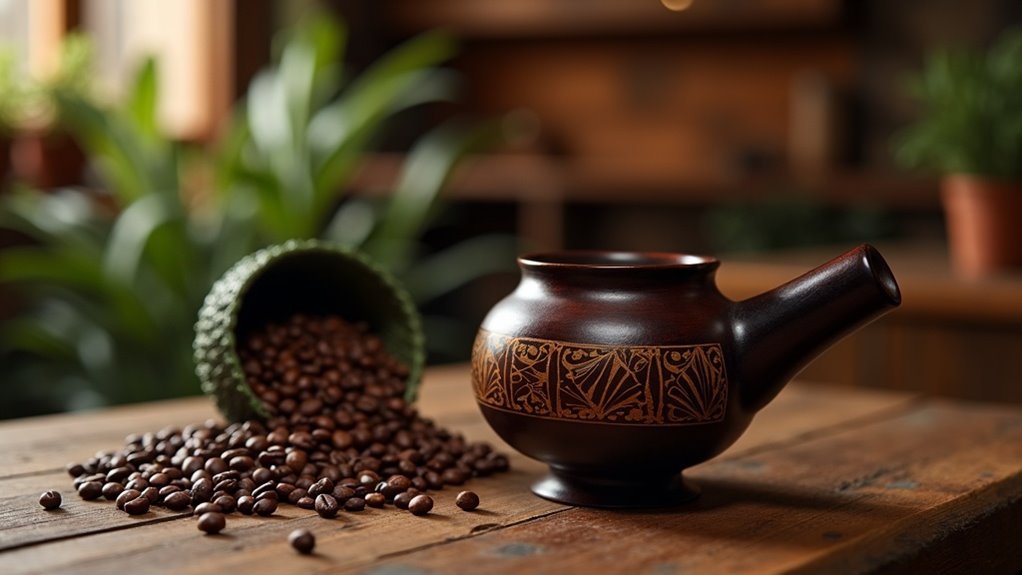
The Ethiopian jebena is a handcrafted clay coffee pot essential for the traditional coffee ceremony, a cornerstone of Ethiopian coffee culture. Its unique design features a long neck and circular base, symbolizing hospitality and community, which are integral to the coffee-drinking experience. Each jebena showcases distinct markings that reflect the artistry of its maker and the owner’s social status. During the coffee ceremony, you’ll witness a rich brewing process that not only emphasizes the importance of coffee but also fosters connections among participants. There’s much more to explore about this cultural artifact and its significance in the world of coffee.
Key Takeaways
- The Ethiopian jebena is a handcrafted clay coffee pot essential for the traditional coffee ceremony known as buna, which is a significant aspect of coffee culture in Ethiopia.
- It features a unique design with a long neck and circular base, showcasing traditional craftsmanship and artistry that highlights the importance of coffee in Ethiopian society.
- The jebena symbolizes Ethiopian hospitality and community, playing a vital role in social interactions during coffee gatherings, where coffee is not just a beverage but a medium for connection.
- Brewing coffee in a jebena involves three stages: roasting, grinding, and brewing, each enhancing the flavor and aroma of the coffee, making it a rich experience for coffee enthusiasts.
- Jebenes vary in size and decoration, reflecting the owner’s social status and often passed down as family heirlooms, adding to the heritage and significance of coffee in Ethiopian culture.
Overview
When you think of Ethiopian coffee culture, the jebena inevitably comes to mind, embodying both tradition and craftsmanship in its design.
This handcrafted clay coffee pot, with its long neck and circular base, plays a crucial role in the traditional Ethiopian coffee ceremony. As you witness the intricate process of brewing coffee—roasting coffee beans, grinding them, and boiling in the jebena—you’ll gain a deeper appreciation for this time-honored ritual that emphasizes hospitality and community.
Each jebena, often adorned with unique decorations, serves not just as a functional tool but also as a cultural artifact, reflecting the rich identity and social connections found within Ethiopian coffee traditions.
History and Cultural Significance
The jebena’s significance extends beyond its function in brewing coffee; it serves as a powerful symbol of Ethiopian hospitality and community connections. The Ethiopian coffee ceremony, known as buna, highlights the importance of this cultural artifact in social interactions, illustrating the journey of coffee from fruit to beverage. Treasured and passed down through generations, the jebena represents shared experiences and cultural identity, with its intricate designs often reflecting the social status of the owner.
| Aspect | Description |
|---|---|
| Cultural Role | Central to community gatherings |
| Heirloom Tradition | Passed down through families |
| Symbol of Status | Ornate designs signify wealth |
Appearance and Design Variations
When you look at an Ethiopian jebena used for brewing coffee, you’ll notice its traditional clay craftsmanship, marked by unique imperfections that speak to its handmade nature.
In contrast to Eritrean designs, the jebena’s long neck-like spout and spherical base serve both aesthetic and functional purposes in the coffee brewing process.
Additionally, the ornate decorations on these vessels often reflect the owner’s social status, with more elaborate designs indicating higher rank within the community.
This makes each jebena not just a tool for coffee preparation, but also a symbol of cultural identity and pride.
Traditional Clay Craftsmanship
While exploring the beauty of Ethiopian jebenas, you’ll discover a remarkable blend of functionality and artistry in their traditional clay craftsmanship, particularly in the context of coffee brewing.
Crafted from locally sourced clay, often by elderly women, each jebena tells a story of skill passed down through generations, making it an integral part of the coffee experience.
Consider these key features:
- Distinctive long neck and spout designed specifically for brewing rich Ethiopian coffee.
- Size variations from 20–45 cm, indicating different brewing capacities and serving sizes.
- Ornate decorations that reflect the owner’s social status and connection to coffee culture.
- Unique markings and imperfections that showcase the handmade artistry, adding character to each coffee ritual.
This craftsmanship not only serves the practical purpose of brewing coffee but also embodies Ethiopian ethnic identity and cultural heritage, making every cup a celebration of tradition.
Ethiopian vs. Eritrean Styles
Ethiopian and Eritrean jebenas play a crucial role in the coffee culture of their respective countries, showcasing distinct design philosophies that reflect their cultural identities and brewing traditions.
Ethiopian jebenas are characterized by a long neck and a spout, often adorned with ornate decorations that signify social status and the importance of coffee in social gatherings. In contrast, Eritrean jebenas lack a spout and tend to have a more utilitarian appearance, with variations in size and shape that reflect regional design preferences.
Both styles are crafted from locally sourced clay, with Ethiopian jebenas primarily made by elderly women, emphasizing the traditional craftsmanship and communal aspects of coffee preparation.
The unique design elements of each type not only serve functional purposes for brewing and serving coffee but also express the rich cultural heritage of Ethiopia and Eritrea, enhancing your appreciation for these beautiful artifacts within the context of their vibrant coffee cultures.
Social Status Indicators
The intricate design variations of jebenas reveal much about the social status of their owners, as these coffee vessels serve not only practical purposes but also as symbols of wealth and prestige in the coffee culture.
Here are some key indicators:
- Ornate Decorations: Elaborate designs often signify upper-class ownership, reflecting the importance of coffee in social settings.
- Craftsmanship: Handcrafted clay jebenas showcase artisanal skills, highlighting the value placed on quality and tradition in coffee preparation.
- Size Variations: Larger jebenas indicate communal use, associating with higher social gatherings where coffee is a focal point.
- Material Embellishments: Gold or silver accents typically signify wealth, especially in aristocratic versions that elevate the coffee experience.
These elements intertwine to illustrate the rich tapestry of Ethiopian coffee culture and its nuanced social hierarchy.
Brewing Process and Stages of Coffee
When you watch the brewing process in a jebena, you witness a harmonious blend of tradition and technique.
You’ll see how the coffee evolves through three distinct stages—awel, kalei, and baraka—each offering a unique taste experience.
This carefully monitored method, combined with the jebena’s design, guarantees a rich and flavorful cup without bitterness, celebrating the art of coffee-making.
Brewing Steps Overview
Brewing coffee in a jebena is an intricate process that unfolds over approximately two hours, inviting participants into a rich cultural experience.
Here’s a quick overview of the brewing steps:
- Roasting: Begin by roasting the coffee beans for about 45 minutes, a step that enhances their flavor and aroma.
- Grinding: Once the beans are roasted, grind them into a fine coffee powder to prepare for brewing.
- Brewing: In the jebena, combine the ground coffee with cold water and gently heat the mixture until steam rises, taking care not to let it boil.
- Serving: After brewing, carefully pour the coffee through a sieve into cups, showcasing the traditional method that highlights Ethiopian culture and the communal experience of enjoying coffee together.
Coffee Serving Stages
As you explore the Ethiopian coffee ceremony, you’ll discover that serving coffee is as integral to the experience as the brewing itself.
Coffee is served in three distinct stages: awel, kalei, and baraka. Each stage offers a unique taste, starting with the strong, potent awel, followed by a slightly diluted kalei, and finishing with the even milder baraka. This progression allows you to savor the evolving flavors of the roasted coffee.
Served in small cups, coffee is accompanied by snacks such as popcorn, enhancing the communal atmosphere. The jebena’s design guarantees a full-bodied brew, emphasizing the craftsmanship involved in this cherished ritual.
Social Aspects of the Coffee Ceremony
While the coffee ceremony, or buna, may seem like a simple ritual centered around brewing and serving coffee, it actually serves as a profound expression of community and hospitality in Ethiopian culture.
During this traditional Ethiopian ceremony, you’ll notice several key aspects:
- Initiation: The youngest woman in the household typically starts the ceremony, fostering connections among participants.
- Serving Order: The oldest or guest of honor receives the first cup, showcasing respect and honoring tradition.
- Atmosphere: Incense and snacks like popcorn enhance the social environment, making the experience more inviting.
- Stages: Serving coffee in three stages deepens communal experience and identity, reinforcing social bonds and creating a sense of belonging.
This rich cultural practice highlights the importance of coffee not just as a beverage, but as a catalyst for social interaction and community building.
Prevalence of the Jebena in Ethiopia
The jebena holds a revered place in Ethiopian coffee culture, serving not just as a vessel for brewing but as a symbol of community and heritage.
It’s central to the traditional coffee ceremony, or buna, which occurs three times daily in many households. Families often pass down jebenas as heirlooms, essential for maintaining cultural identity connected to coffee.
The design of a jebena can reflect social status, with ornate versions reserved for special occasions within coffee gatherings. Without a jebena, the buna ceremony falters, disrupting communal coffee experiences.
Its prevalence even extends to Ethiopian migrants, reinforcing ties to their heritage and coffee traditions worldwide.
Jebena in the Lives of Migrants
For Ethiopian migrants, the jebena isn’t just a coffee pot; it’s a profound symbol of their cultural heritage and an essential link to the traditions they cherish, particularly in their coffee rituals.
The jebena plays a significant role in their lives by:
- Serving as a cultural artifact that embodies their ethnic identity through the art of coffee preparation.
- Facilitating the buna ceremony, a cherished event that strengthens community bonds over shared coffee experiences.
- Fostering familial connections through the shared ritual of brewing and enjoying coffee together.
- Reflecting social status with highly decorated jebenas, which symbolize wealth and pride in the diaspora.
In every sip, the jebena helps preserve coffee traditions and creates a comforting sense of home, regardless of where they reside.
Purchasing and Caring for a Jebena
When considering the purchase of a jebena, you’ll discover that these distinctive coffee pots can be found at local Ethiopian or Eritrean shops, as well as on online platforms like Etsy and eBay.
Prices typically range from $20 to $100, depending on the size and decorative elements.
Caring for your jebena is essential to maintain its quality; it involves hand washing with mild soap and refraining from using dishwashers. Be sure to allow it to dry completely before storing.
After each use, remember to polish it with coffee grounds for optimal flavor.
Each jebena also boasts unique markings and requires a curing process before its first use to enhance the brewing experience and ensure longevity.
You can choose from small, medium, or large sizes to suit your coffee brewing needs!